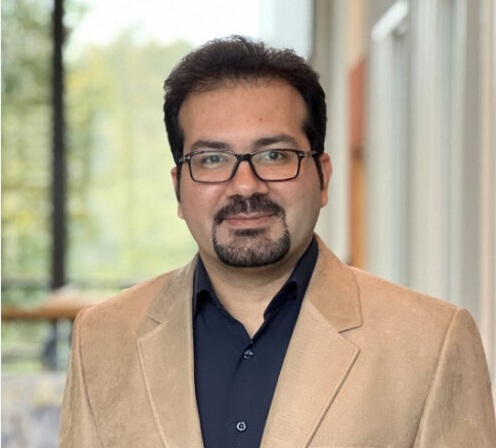
Dr. Bhavesh Kataria
Associate Professor, School of Computing and Technology, Institute of Advanced Research, Gandhinagar, India
“From Pixels to Knowledge: Vision-Language Models for Digital Pathology and Biomedical AI”
Abstract
Artificial intelligence has rapidly transformed the field of medical imaging, enabling computational systems to detect patterns and extract meaningful information from complex visual data. In recent years, the emergence of Vision-Language Models (VLMs) has introduced a new paradigm by connecting visual understanding with natural language, creating opportunities for AI systems that can not only analyze images but also reason about them, communicate findings, and integrate multimodal biomedical knowledge.
Digital pathology is a particularly compelling domain for this transformation. Whole-slide images contain enormous amounts of visual and spatial information, ranging from cellular morphology to tissue architecture, and present significant computational and methodological challenges. Traditional deep learning approaches have achieved promising results in tasks such as tissue classification, cancer detection, and biomarker prediction. However, these approaches are often task-specific and require substantial amounts of carefully annotated data.
This keynote will explore how foundation models and Vision-Language Models can help address these challenges and support a more flexible and generalizable approach to computational pathology. The presentation will discuss the integration of visual information from whole-slide images with textual information from pathology reports, scientific literature, and clinical knowledge. It will examine how multimodal learning can support zero-shot and few-shot learning, improved representation learning, interactive AI systems, and new approaches to scientific discovery.
Drawing on recent developments in digital pathology and biomedical AI, the talk will also discuss the practical challenges involved in deploying VLMs in real-world biomedical workflows, including data quality, domain adaptation, interpretability, computational infrastructure, privacy, and clinical validation. Attention will be given to the distinction between impressive model capabilities in research settings and the requirements for reliable, trustworthy, and clinically meaningful AI systems.
Ultimately, Vision-Language Models have the potential to move medical AI beyond isolated image-analysis tasks toward systems capable of integrating visual evidence with biomedical knowledge and human expertise. This keynote will provide an overview of the opportunities, challenges, and future directions of VLMs in digital pathology and medical imaging, with the goal of encouraging collaboration between the machine vision and biomedical research communities.
Biography
Dr. Bhavesh Kataria is an Associate Professor at the School of Computing and Technology, Institute of Advanced Research, Gandhinagar, India. He holds a Ph.D. in Computer Engineering and has over 18 years of integrated teaching, research and academic leadership experience spanning premier institutions in India and the United States, including the Indian Institute of Science (IISc) Bangalore and the School of Medicine at Emory University, Atlanta, where he served as an NIH-sponsored Post-Doctoral Research Fellow. He previously headed the Department of Computer Science at Kadi Sarva Vishwavidyalaya, Gandhinagar. His research focuses on artificial intelligence, machine learning, deep learning, computer vision and their translational applications in digital pathology, medical image analysis and large-scale whole-slide image informatics. He has published in IEEE Transactions, Elsevier and Springer Nature, holds eight granted patents and design registrations across the United Kingdom and India, and has authored or co-authored six books and book chapters.






 +989016845707
 Direction To Kashan University
 mvip2026.kashan@gmail.com
 mvip2026.ismvip.ir