MVIP2026

Keynote Speakers

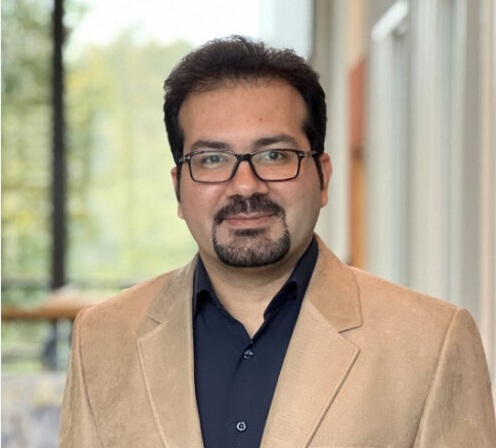
Dr. Seyed Jalaleddin Mousavirad

Dr. Seyed Jalaleddin Mousavirad

Senior Member, IEEE · Assistant Professor, Mid Sweden University, Sweden
“When Algorithms Evolve: The Evolutionary Path to Better Vision Models”
Abstract
Imagine computer vision systems that evolve their own architectures, optimize their parameters, and discover novel image features—all without explicit human design. This is the promise of evolutionary computation (EC), a family of algorithms inspired by natural selection. In this talk, we explore how EC empowers computer vision by automating neural architecture design, fine-tuning hyperparameters, and even optimizing preprocessing strategies. From neuroevolution to genetic programming, evolutionary approaches are reshaping how visual intelligence is created and improved. We will examine practical applications, including evolving convolutional and transformer-based vision models, discovering task-specific filters, and integrating EC with deep learning pipelines for greater adaptability and efficiency. The session concludes with a look at emerging directions where evolution-driven AI continuously adapts to new data and environments—paving the way for the next generation of self-evolving vision systems.
Biography
Seyed Jalaleddin Mousavirad (Senior Member, IEEE) is an Assistant Professor at Mid Sweden University, Sundsvall, Sweden. Prior to this, he was a Postdoctoral Researcher at Mid Sweden University and a Postdoctoral Research Fellow at the University of Beira Interior, Portugal, where he contributed to the European project GreenStamp. He has also gained international research experience as a visiting scholar with a leading research group at Xi’an Jiaotong–Liverpool University, Suzhou, China. He is the author of one book, nine book chapters, and more than 180 papers published in international journals and conference proceedings. His research interests include machine learning, evolutionary computation, computer vision, applied artificial intelligence, and measurement systems.
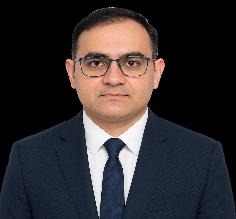
Dr. Bhavesh Kataria

Dr. Bhavesh Kataria

Associate Professor, School of Computing and Technology, Institute of Advanced Research, Gandhinagar, India
“From Pixels to Knowledge: Vision-Language Models for Digital Pathology and Biomedical AI”
Abstract
Artificial intelligence has rapidly transformed the field of medical imaging, enabling computational systems to detect patterns and extract meaningful information from complex visual data. In recent years, the emergence of Vision-Language Models (VLMs) has introduced a new paradigm by connecting visual understanding with natural language, creating opportunities for AI systems that can not only analyze images but also reason about them, communicate findings, and integrate multimodal biomedical knowledge.

Digital pathology is a particularly compelling domain for this transformation. Whole-slide images contain enormous amounts of visual and spatial information, ranging from cellular morphology to tissue architecture, and present significant computational and methodological challenges. Traditional deep learning approaches have achieved promising results in tasks such as tissue classification, cancer detection, and biomarker prediction. However, these approaches are often task-specific and require substantial amounts of carefully annotated data.

This keynote will explore how foundation models and Vision-Language Models can help address these challenges and support a more flexible and generalizable approach to computational pathology. The presentation will discuss the integration of visual information from whole-slide images with textual information from pathology reports, scientific literature, and clinical knowledge. It will examine how multimodal learning can support zero-shot and few-shot learning, improved representation learning, interactive AI systems, and new approaches to scientific discovery.

Drawing on recent developments in digital pathology and biomedical AI, the talk will also discuss the practical challenges involved in deploying VLMs in real-world biomedical workflows, including data quality, domain adaptation, interpretability, computational infrastructure, privacy, and clinical validation. Attention will be given to the distinction between impressive model capabilities in research settings and the requirements for reliable, trustworthy, and clinically meaningful AI systems.

Ultimately, Vision-Language Models have the potential to move medical AI beyond isolated image-analysis tasks toward systems capable of integrating visual evidence with biomedical knowledge and human expertise. This keynote will provide an overview of the opportunities, challenges, and future directions of VLMs in digital pathology and medical imaging, with the goal of encouraging collaboration between the machine vision and biomedical research communities.
Biography
Dr. Bhavesh Kataria is an Associate Professor at the School of Computing and Technology, Institute of Advanced Research, Gandhinagar, India. He holds a Ph.D. in Computer Engineering and has over 18 years of integrated teaching, research and academic leadership experience spanning premier institutions in India and the United States, including the Indian Institute of Science (IISc) Bangalore and the School of Medicine at Emory University, Atlanta, where he served as an NIH-sponsored Post-Doctoral Research Fellow. He previously headed the Department of Computer Science at Kadi Sarva Vishwavidyalaya, Gandhinagar. His research focuses on artificial intelligence, machine learning, deep learning, computer vision and their translational applications in digital pathology, medical image analysis and large-scale whole-slide image informatics. He has published in IEEE Transactions, Elsevier and Springer Nature, holds eight granted patents and design registrations across the United Kingdom and India, and has authored or co-authored six books and book chapters.
Dr. Maryam Haji Esmaeili

Dr. Maryam Haji Esmaeili

Head of the Innovation Center, Refah Bank · Faculty Member, Islamic Azad University, Central Tehran Branch
“Computer Vision as a Driver of Innovation: AI Capabilities in Healthcare and Digital Transformation”
Abstract
Computer vision, as a key field of artificial intelligence, offers significant opportunities to extract meaningful information from visual data and transform it into actionable insights for decision-making. Advances in image processing and deep learning have enabled a wide range of applications in healthcare, medical imaging, industrial quality control, document analysis, and organizational digital transformation. However, realizing the full value of these technologies depends not only on algorithmic accuracy but also on data quality, scientific validation, alignment with user needs, integration into operational workflows, and adherence to ethical and security requirements.

This keynote adopts an interdisciplinary perspective to examine the capabilities of computer vision in medical image analysis, image segmentation, quantitative assessment, workflow support, and operational efficiency. It also explores the role of computer vision in organizational process redesign, intelligent service development, and collaboration among universities, industry, and innovation centers. Key challenges—including algorithmic bias, generalizability, data privacy, transparency, human oversight, and continuous performance monitoring—are discussed. Finally, a practical roadmap is proposed, covering problem identification, data and technology assessment, scientific validation, pilot implementation, and measurable evaluation of operational value. The central argument is that computer vision becomes a sustainable driver of innovation when technical capabilities are aligned with real-world needs, reliable evidence, responsible governance, and measurable value creation.
Biography
Dr. Maryam HajiEsmaeili is a specialist in computer vision and medical image processing, with professional interests in artificial intelligence, visual data analysis, and technology-driven solutions. Her areas of expertise include computer vision, image processing, and the application of AI to medical image analysis. She also serves as Head of the Innovation Center of Refah Kargaran Bank, where her role connects technological capabilities with organizational needs and innovation development. As a keynote speaker at the 14th National and 4th International Conference on Machine Vision and Image Processing (MVIP 2026), she addresses the intersection of computer vision research, AI applications in healthcare, and the strategic requirements of digital transformation.
Dr. Hamid Abrishami Moghaddam

Dr. Hamid Abrishami Moghaddam

Professor of Biomedical Engineering, K.N. Toosi University of Technology
“Artificial Intelligence in Lung CT Image Analysis: Advances and Priorities”
Abstract
This talk reviews how artificial intelligence and deep learning are changing the analysis of lung CT images — from automated detection and segmentation of pulmonary lesions to quantitative reporting and clinical decision support. It highlights the advances that have proven most useful in practice, the methodological pitfalls that limit translation into the clinic, and the research priorities that matter most for the coming years.
Biography
Dr. Hamid Abrishami Moghaddam is a Professor in the Department of Biomedical Engineering, Faculty of Electrical and Computer Engineering, K.N. Toosi University of Technology, Tehran. He received his Ph.D. in Biomedical Engineering from the Université de Technologie de Compiègne (UTC), France, in 1998, with a thesis on the segmentation of multidimensional MRI cardiac images. His research interests include machine vision, pattern recognition, image processing and medical imaging.